
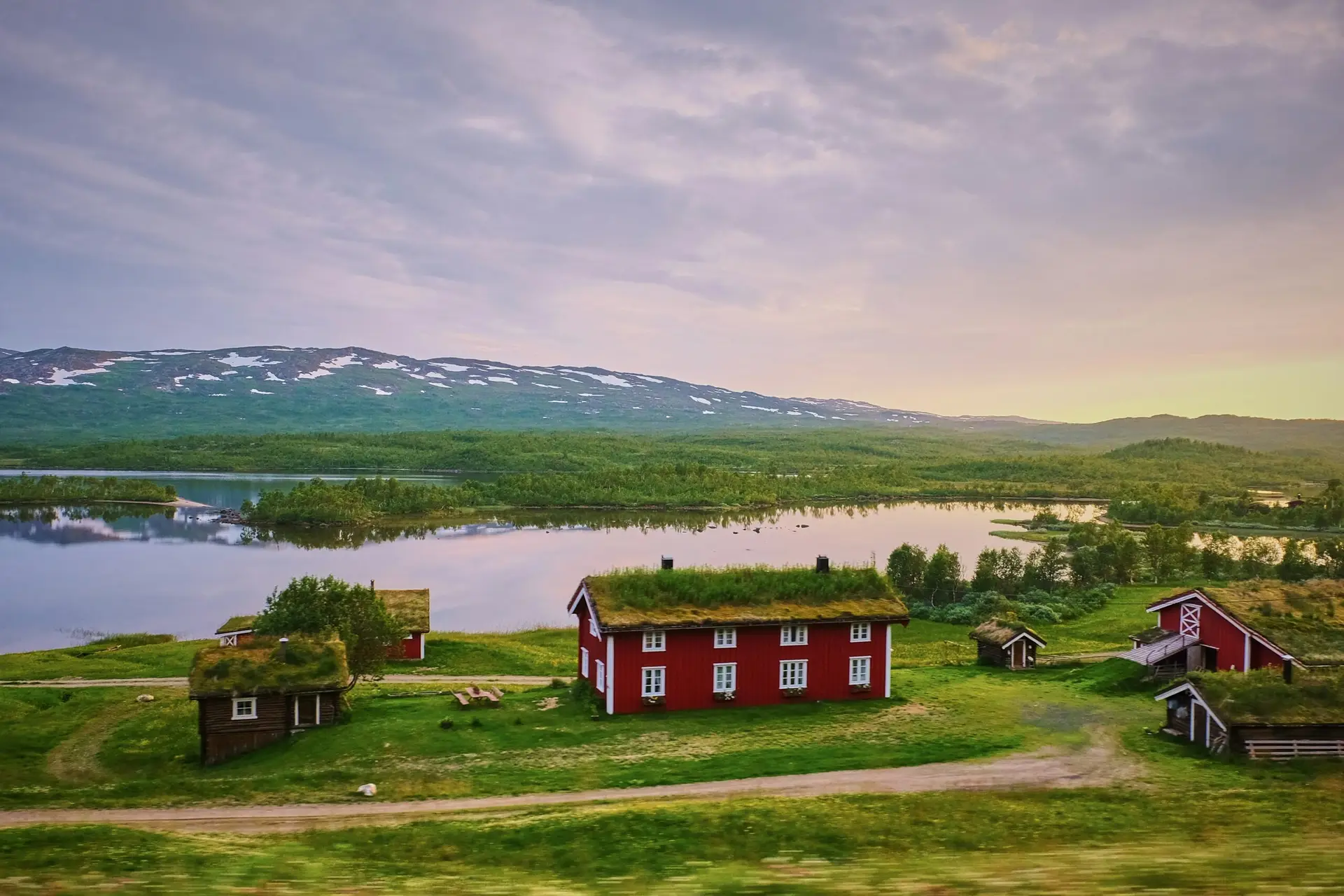
In most countries, walking onto someone’s land without asking is trespassing. In Sweden, within reasonable limits, it’s a legal right, one that shapes how Swedes relate to nature far more than most visitors expect.
What the right actually allows
Allemansrätten, literally “everyone’s right,” lets anyone walk, cycle, ski, or camp temporarily almost anywhere in the Swedish countryside, including on privately owned land, without asking permission first. You can pick wild berries, mushrooms, and flowers (with a few protected species exceptions), swim in lakes, and pitch a tent for a night or two in most places, even if the land technically belongs to someone else.
It’s not, however, an unlimited free for all. The right comes with an unofficial but widely understood motto: inte störa, inte förstöra, “don’t disturb, don’t destroy.” In practice, this means:
Staying a reasonable distance from private homes (not walking through someone’s garden or camping right next to their house)
Not damaging crops, fences, or young forest
Leaving no trace, taking rubbish with you, not lighting fires during dry periods
Not driving motor vehicles off road
att störa: to disturb
att förstöra: to destroy (notice how close these two verbs look; it’s a good example of how a single added syllable changes meaning in Swedish)
naturen: nature, the definite form of natur
A legal right, not just a custom
What makes allemansrätten unusual is that it isn’t a vague cultural habit. It has quasi constitutional standing, referenced directly in Sweden’s Instrument of Government (one of the country’s fundamental laws), even though the detailed rules themselves are spread across several separate laws rather than one single code. This is part of why Swedes tend to talk about it with a certain pride: it’s treated as a genuine right, not a loophole or an informal courtesy.
Why it shapes everyday life
Because of allemansrätten, spending time in nature in Sweden doesn’t require owning land, joining a club, or paying for access, the way it might elsewhere. A weekend hike, a lakeside swim, or an evening of berry picking is available to more or less anyone, which helps explain why so much of Swedish free time, and so much of Swedish self image, revolves around being outdoors. It’s also why you’ll often hear Swedes casually reference the right in conversation, saying things like “det är ju allemansrätten” (“well, it’s everyone’s right”) when explaining why they’ve set up a picnic in a field that isn’t technically theirs.
For learners, it’s a good example of a word that’s genuinely hard to translate in one go. “The right to roam” gets close in English, but allemansrätten carries a legal weight and cultural familiarity that the translation doesn’t fully capture.
If you’d like to learn more, we’d love to have you join our courses! Feel free to reach out anytime with questions at info@swedishready.com. Våga prova!