

Skip to content
Swedishready
  • WHY LEARN WITH US
  • SWEDISH COURSES
  • FREE RESOURCES
  • NEWSLETTER
  • BLOG
  • CONTACT
    • LEVEL TEST
LOGIN
Swedishready
  • WHY LEARN WITH US
  • SWEDISH COURSES
  • FREE RESOURCES
  • NEWSLETTER
  • BLOG
  • CONTACT
    • LEVEL TEST
LOGIN
Swedishready
LOGIN
Swedishready
  • WHY LEARN WITH US
  • SWEDISH COURSES
  • FREE RESOURCES
  • NEWSLETTER
  • BLOG
  • CONTACT
    • LEVEL TEST
Copyright 2021 - All Right Reserved
Category:

Uncategorized

Building Swedish immersion into everyday life

by admin 20.08.2026

Full immersion usually means moving somewhere the language is spoken every day, but most learners don’t have that option, and honestly, don’t need it to make real progress. What actually matters is exposure: hearing and reading Swedish often enough, in enough different contexts, that your brain starts treating it as normal input rather than a puzzle to decode. Here’s how to build that without leaving your living room.

Change what’s playing in the background
The easiest habit to build is also the least demanding: swap some of your passive listening time for Swedish. This doesn’t have to mean sitting down and studying. Putting on a Swedish podcast while cooking, or Swedish music during a workout, trains your ear to the sound and rhythm of the language even when you’re not actively focused on it. It won’t teach grammar, but it builds familiarity that makes active study easier later.

Watch Swedish shows and films, with Swedish subtitles
Swedish subtitles on Swedish content (rather than subtitles in your own language) is one of the more underused tricks in language learning. It lets you connect the sound of a word to its spelling in real time, which strengthens both listening and reading at once. Swedish crime dramas and films have a strong international reputation and are widely available on major streaming platforms, a good, entertaining entry point if you’re not sure where to start.

Switch a few everyday tools to Swedish
Changing your phone’s language, or the language of a couple of apps you use daily, sounds small but adds up. You end up encountering the same handful of useful, high frequency words (settings, notifications, weather) dozens of times a week without any dedicated study time at all.

Read things you’d read anyway
Rather than forcing yourself through a “beginner reader” you’re not actually interested in, look for Swedish versions of content you already enjoy: news summaries, recipe blogs, sports coverage, or children’s books if you’re just starting out (children’s books use simpler grammar and vocabulary without being boring). Interest sustains the habit far longer than duty does.

Talk to yourself
It sounds strange written down, but narrating small parts of your day in Swedish (“now I’m making coffee,” “I need to leave in ten minutes”) is a low pressure way to practice retrieving vocabulary and forming sentences without needing a conversation partner on hand. It builds the same mental muscle as speaking with someone else, just with no risk of embarrassment.

Keep a short word list from real life
Instead of studying vocabulary lists disconnected from your life, jot down Swedish words you actually encounter and want to remember, from a show, a song lyric, a label on a product. Words tied to something you noticed yourself tend to stick better than words picked from a generic list, simply because there’s already a memory attached to them.

Where a teacher still matters
Immersion builds familiarity and intuition, but it doesn’t replace correction. It’s entirely possible to absorb a wrong pronunciation or a slightly off phrase for months without ever noticing, simply because nothing in your daily immersion tells you it’s wrong. That’s the gap a real teacher fills, catching the small things before they turn into habits. The strongest results tend to come from combining daily immersion like this with structured lessons in one of our courses, not from immersion alone.

If you’d like to learn more, we’d love to have you join our courses! Feel free to reach out anytime with questions at info@swedishready.com. Våga prova!

A practical guide to learning Swedish online

by admin 20.08.2026

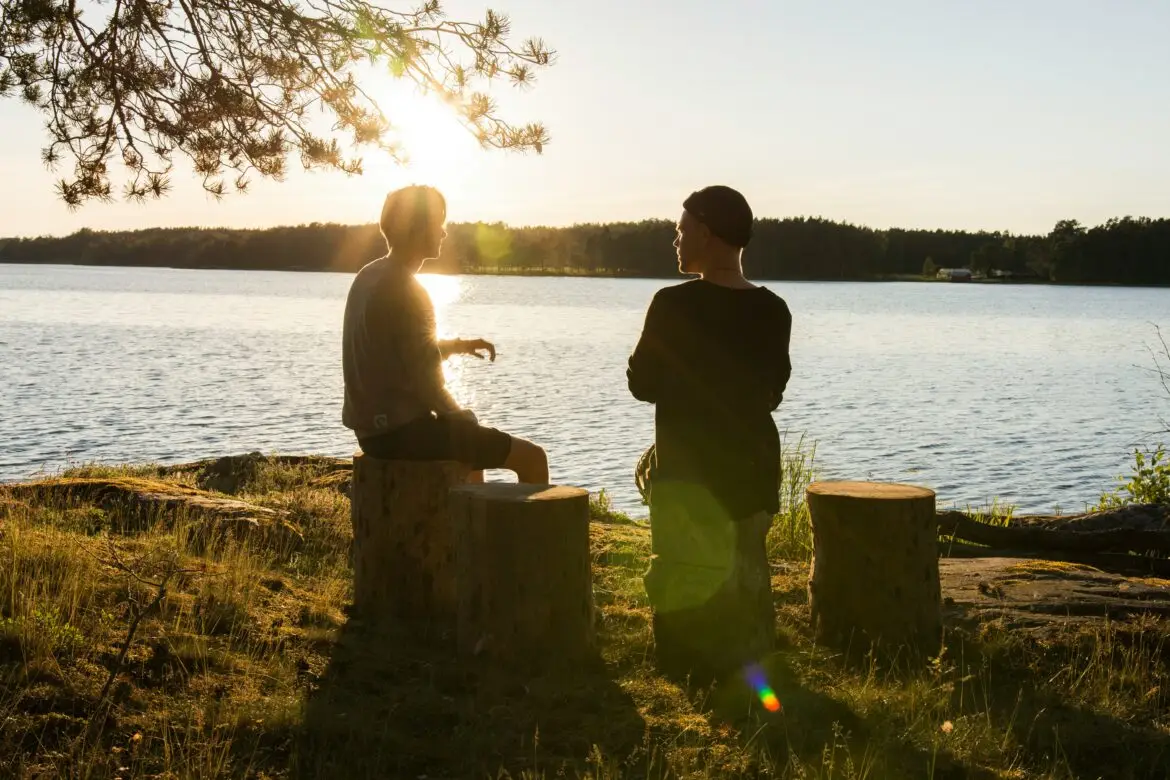
Apps and online tools won’t replace structured lessons or real conversation, but used well, they fill in the gaps between classes, the ten minutes on a commute, the vocabulary review before bed. Here’s what’s genuinely useful, organized by what each tool is actually good for.

For building vocabulary
Spaced repetition apps like Anki or Quizlet are excellent for making new words stick, because they show you a word right before you’re about to forget it, rather than at random intervals. They’re not glamorous, but the underlying method has decades of research behind it. Clozemaster does something similar but with full sentences instead of isolated words, which helps you learn vocabulary in context rather than as a disconnected list.

For structured daily practice
Duolingo’s Swedish course is a reasonable starting point for absolute beginners. It’s low pressure and good at building a daily habit, but it’s worth knowing its limits. It teaches vocabulary and basic patterns well, but explains very little grammar, and its example sentences can be oddly specific or repetitive. Treat it as a supplement to structured lessons, not a replacement for them.

For listening comprehension
This is where a lot of self taught learners fall behind, simply because it’s the hardest skill to practice alone. A few starting points:

  • Sveriges Radio’s “Radio Sweden på lätt svenska”: news in simplified, slower Swedish, aimed specifically at learners

  • SVT Barn (Swedish public broadcaster’s children’s content): genuinely useful for learners, since children’s programming uses simpler vocabulary and clearer pronunciation without being condescending in content

  • Swedish podcasts and YouTube channels aimed at learners, which usually include transcripts. Reading along while listening builds the connection between spoken and written Swedish faster than either skill alone.

For grammar reference
Rivstart and Mål are textbook series widely used in Swedish language courses (including many SFI, Swedish for Immigrants, programs), and both have companion websites with exercises. For quick grammar lookups, Svenska Akademiens ordlista (SAOL), the Swedish Academy’s official dictionary, and SO, Svensk ordbok, are the most reliable references for word meanings, gender, and inflection, more precise than general translation apps.

For real conversation
No app fully replaces speaking with another person, and this is usually the piece self taught learners skip longest, often because it’s the most uncomfortable. Tandem language exchange apps (like Tandem or HelloTalk) can connect you with Swedish speakers learning your language in return. It’s also, unsurprisingly, exactly what structured conversation practice in a course is built to provide, with the added benefit of feedback and correction along the way.

Why none of this replaces a real teacher
Apps and self study tools are genuinely useful, but they all share the same blind spot: they can’t correct you in real time, explain why something is wrong in a way that actually clicks, or adjust to what you personally find difficult. That’s the role a real teacher plays, and it’s why the strongest results usually come from combining daily app practice with structured lessons, not from apps alone. Our courses are built for exactly that: a foundation from real Swedish teachers, with all the tools above as useful extras around it, not the other way around.

A realistic combination
Most successful self directed learners end up mixing three types of tools: something for daily vocabulary review (Anki or Clozemaster), something for listening (learner aimed podcasts or Radio Sweden), and something for real interaction, whether that’s a course, a tandem partner, or ideally both.

If you’d like to learn more, we’d love to have you join our courses! Feel free to reach out anytime with questions at info@swedishready.com. Våga prova!

How long does it take to learn Swedish?

by admin 20.08.2026

It’s one of the first questions almost every new student asks, and it’s a fair one, but the honest answer is “it depends,” followed by a few numbers that actually help you plan.

What the official estimates say
The US Foreign Service Institute (FSI), which trains American diplomats, classifies Swedish as a Category I language for English speakers, the easiest category, alongside languages like Dutch, Norwegian, and Spanish. Their estimate is around 600 to 750 hours of study to reach professional working proficiency. That sounds like a lot until you break it down: at five hours a week, that’s roughly two and a half to three years; at fifteen hours a week, under a year.

It’s worth being clear about what that number describes, though: professional fluency, the kind needed to work entirely in Swedish. Everyday conversational comfort, which is what most learners actually want first, comes much sooner, often within six months to a year of consistent study.

Why Swedish is easier for some learners

  • Shared vocabulary. English and Swedish both descend from Germanic roots, and centuries of shared influence (plus a lot of English loanwords in modern Swedish) mean learners recognize far more words than they’d expect on day one.

  • Simple verb conjugation. Swedish verbs don’t change based on who’s doing the action. Jag talar, du talar, hon talar (I speak, you speak, she speaks) all use the same verb form. That removes an entire category of memorization that trips up learners of languages like French or Spanish.

  • Widespread English proficiency in Sweden, ironically, works both ways: it makes real life communication easier when you’re stuck, but it also means you’ll need to actively insist on Swedish sometimes, since Swedes often switch to English by reflex.


  • att tala: to speak (formal/written register)

  • att prata: to speak, to chat (everyday spoken register)

  • Both are correct, but prata is what you’ll hear far more often in casual conversation.

What actually slows people down
Time estimates assume consistent, active study, and that’s the part that varies most in real life. Passive exposure (living in Sweden, hearing it around you) helps but isn’t the same as structured practice. Two features of the language also tend to take longer than the rest: word order in subordinate clauses, and the pitch accent that gives Swedish its characteristic melody. Neither is something you master quickly; both improve gradually through consistent listening and speaking practice, more than through study time alone.


Rather than aiming for a single finish line, it helps to think in stages:

  • 1-3 months: Basic phrases, introductions, simple present tense sentences

  • 6-12 months: Comfortable everyday conversation, understanding most spoken Swedish at a normal pace

  • 1-2 years: Confident, flexible conversation across most topics

  • 2-3+ years: Professional or near native fluency, depending on intensity of study

Consistency beats intensity here. Thirty focused minutes a day, most days, will get you further than an occasional five hour cramming session, and it’s a lot easier to sustain. If you’d like to learn more, we’d love to have you join our courses! Feel free to reach out anytime with questions at info@swedishready.com.

Våga prova!

5 Swedish mistakes most learners make

by admin 20.08.2026

Every language has its own set of traps for beginners, and after teaching Swedish for a while, certain mistakes come up again and again, regardless of the learner’s native language or background. None of them are a sign that Swedish is “too hard,” they’re just the predictable friction points. Here are the five we see most often, and how to work around them.

Mixing up “en” and “ett” words
Swedish nouns are split into two grammatical genders, common gender (en words) and neuter (ett words), and roughly 75% of nouns fall into the en category. There’s no reliable rule for guessing which group a new word belongs to, which is exactly why so many learners try to guess instead of memorizing it, and end up saying things like “ett bil” instead of “en bil” (a car).

The fix: learn the article together with the noun from day one, not “hus” but “ett hus,” not “bil” but “en bil.” Treat the article as part of the word’s spelling, not a separate grammar rule to apply afterward.

Ignoring word order in main vs. subordinate clauses
Swedish has a rule that trips up even intermediate learners: in main clauses, the negation word (inte) comes after the verb, but in subordinate clauses, it comes before it.

Main clause: Jag förstår inte. (I don’t understand.)
Subordinate clause: …att jag inte förstår. (…that I don’t understand.)

This small shift affects a lot of sentences, and it’s genuinely one of the harder Swedish rules to internalize, mostly because it doesn’t map onto English word order at all. It usually clicks through repeated exposure rather than memorized rules; reading and listening a lot helps more than drilling the grammar chart.

Underestimating pronunciation early on
Because Swedish shares a lot of vocabulary with English and German, learners sometimes assume pronunciation will “come naturally” and skip focused practice on it. Two sounds in particular cause trouble: the sj sound (in words like sju, seven) and the pitch accent that gives Swedish its sing song quality. Getting these wrong doesn’t usually block communication, but it’s one of the fastest ways to sound consistently foreign, even after years of study, and it’s much easier to build correctly from the start than to fix later.

Translating word for word from English
Swedish and English share enough vocabulary that direct translation often almost works, which is precisely what makes it a trap. Phrases like “jag tycker om” (I like) get formed correctly, but plenty of others don’t. A common one: English speakers often say “jag är kall” to mean “I’m cold,” but that actually means “I am a cold person” (personality wise). The correct phrase is “jag fryser” (I’m freezing, or I feel cold). Small mismatches like this are everywhere, and they’re worth learning as fixed phrases rather than reconstructing from English each time.

Avoiding speaking until “ready”
This isn’t a grammar mistake, but it might be the most common one overall: waiting until vocabulary and grammar feel solid before attempting to speak. In practice, speaking ability develops through speaking, not before it. Swedes are also, generally, encouraging toward learners. Switching to English is more often a matter of habit or efficiency than judgment. Starting to speak early, mistakes included, tends to produce faster, more natural progress than waiting for a readiness that never quite arrives.

If you’d like to learn more, we’d love to have you join our courses! Feel free to reach out anytime with questions at info@swedishready.com. Våga prova!
What is allemansrätten in Sweden?

by admin 20.08.2026

In most countries, walking onto someone’s land without asking is trespassing. In Sweden, within reasonable limits, it’s a legal right, one that shapes how Swedes relate to nature far more than most visitors expect.

What the right actually allows
Allemansrätten, literally “everyone’s right,” lets anyone walk, cycle, ski, or camp temporarily almost anywhere in the Swedish countryside, including on privately owned land, without asking permission first. You can pick wild berries, mushrooms, and flowers (with a few protected species exceptions), swim in lakes, and pitch a tent for a night or two in most places, even if the land technically belongs to someone else.

It’s not, however, an unlimited free for all. The right comes with an unofficial but widely understood motto: inte störa, inte förstöra, “don’t disturb, don’t destroy.” In practice, this means:

  • Staying a reasonable distance from private homes (not walking through someone’s garden or camping right next to their house)

  • Not damaging crops, fences, or young forest

  • Leaving no trace, taking rubbish with you, not lighting fires during dry periods

  • Not driving motor vehicles off road


  • att störa: to disturb

  • att förstöra: to destroy (notice how close these two verbs look; it’s a good example of how a single added syllable changes meaning in Swedish)

  • naturen: nature, the definite form of natur

A legal right, not just a custom
What makes allemansrätten unusual is that it isn’t a vague cultural habit. It has quasi constitutional standing, referenced directly in Sweden’s Instrument of Government (one of the country’s fundamental laws), even though the detailed rules themselves are spread across several separate laws rather than one single code. This is part of why Swedes tend to talk about it with a certain pride: it’s treated as a genuine right, not a loophole or an informal courtesy.

Why it shapes everyday life
Because of allemansrätten, spending time in nature in Sweden doesn’t require owning land, joining a club, or paying for access, the way it might elsewhere. A weekend hike, a lakeside swim, or an evening of berry picking is available to more or less anyone, which helps explain why so much of Swedish free time, and so much of Swedish self image, revolves around being outdoors. It’s also why you’ll often hear Swedes casually reference the right in conversation, saying things like “det är ju allemansrätten” (“well, it’s everyone’s right”) when explaining why they’ve set up a picnic in a field that isn’t technically theirs.

For learners, it’s a good example of a word that’s genuinely hard to translate in one go. “The right to roam” gets close in English, but allemansrätten carries a legal weight and cultural familiarity that the translation doesn’t fully capture.

If you’d like to learn more, we’d love to have you join our courses! Feel free to reach out anytime with questions at info@swedishready.com. Våga prova!

 

Why Swedes celebrate the longest day of the year

by admin 19.08.2026

If you ask a Swede which holiday matters most to them, a surprising number will say Midsummer (midsommar) before they say Christmas. It falls on the Friday between June 19th and 25th, close to the summer solstice, and for many Swedes it marks the real, emotional start of summer, the point where work slows down, cities empty out, and everyone heads to the countryside or the archipelago.

Flowers, poles, and a dance about frogs
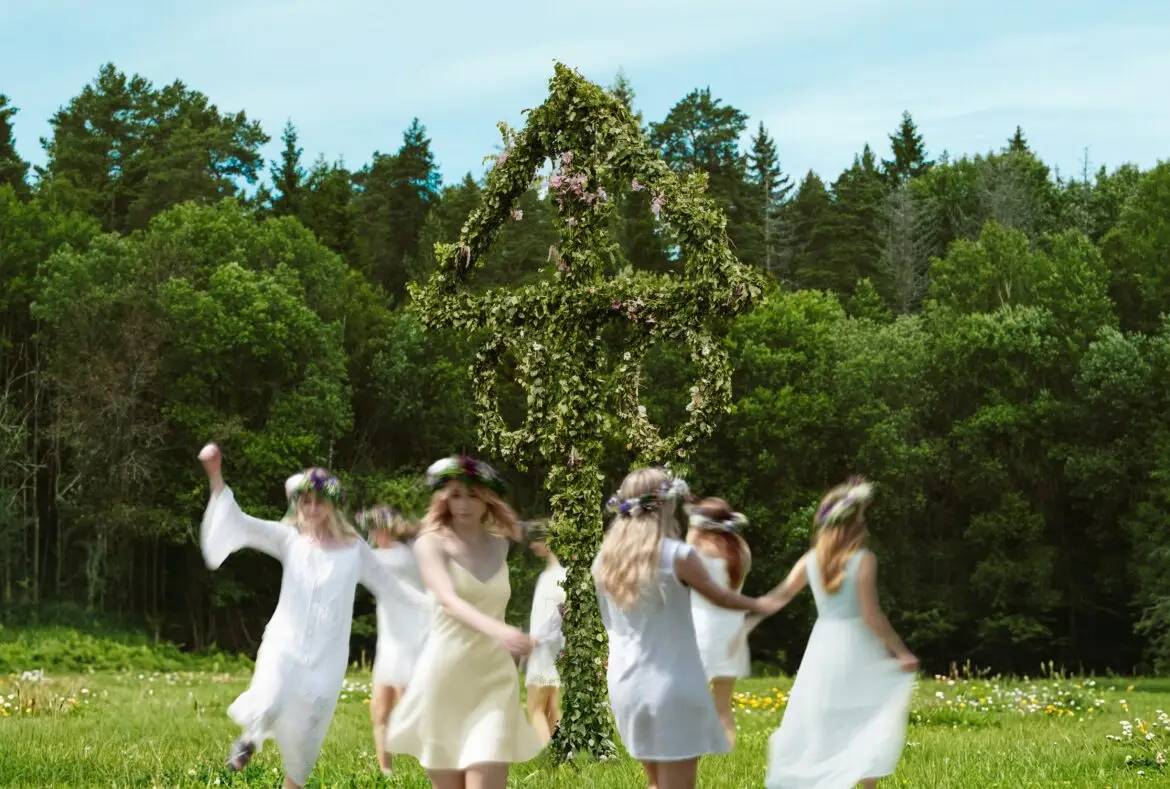
The most recognizable image of Swedish Midsummer is the midsommarstång (also called majstång), a tall pole decorated with leaves and flowers, raised in an open field. Around it, people, often in traditional dress, though plenty just wear regular summer clothes, join hands and dance to a handful of well known songs. The most famous of these is “Små grodorna” (“The Little Frogs”), which involves hopping around and imitating frogs. It looks, and is, a little silly. Nobody minds.

Flower crowns (midsommarkrans) are another central tradition, worn by children and adults alike. Making them is often a group activity earlier in the day, using wildflowers picked nearby. There’s an old belief that if an unmarried woman picks seven or nine different flowers in silence and places them under her pillow that night, she’ll dream of her future husband.

  • midsommarafton: Midsummer’s Eve, the main celebration day (a Friday)

  • midsommardagen: Midsummer’s Day itself, the Saturday

  • en krans: a wreath or crown, as in midsommarkrans, a flower crown

The Midsummer table
Food follows a fairly fixed script. Pickled herring (sill) in several varieties (mustard, dill, onion) is the centerpiece, usually eaten with boiled new potatoes, sour cream, and chives. It’s traditionally the first proper harvest of new potatoes each year, which is part of why the meal feels so tied to the season. Fresh strawberries, ideally Swedish grown and at their sweetest around this time of year, typically close out the meal, sometimes with cream, sometimes simply on their own.

Aquavit (a flavored spirit) often accompanies the herring course, along with short drinking songs (snapsvisor) sung before each shot, a tradition that tends to get livelier as the evening goes on.

Why it matters so much
Part of what makes Midsummer significant is geography. In much of Sweden, and especially further north, the sun barely sets around this time of year. That light, after a long, dark winter, carries real emotional weight. Midsummer isn’t only a festival, it’s a collective exhale. Offices, shops, and even some public transport schedules scale back for the day, and it’s common for Swedes living abroad to make a point of coming home for it, even when they skip other holidays.

For a language learner, Midsummer vocabulary is worth picking up early, since you’ll hear it used constantly in conversation and in the news each June. If you’d like to learn more, we’d love to have you join our courses! Feel free to reach out anytime with questions at info@swedishready.com. Våga prova!

What does lagom really mean?

by admin 19.08.2026

There’s a Swedish word that gets quoted in almost every article about Scandinavian lifestyle: lagom. It’s often translated as “just the right amount,” and while that’s not wrong, it undersells how often the word actually gets used in everyday Swedish, and how little it has to do with candles and minimalist interiors, despite what lifestyle blogs might suggest.

Where does the word come from?
One popular (if disputed) theory traces lagom back to the phrase laget om, “around the team” or “around the group,” supposedly from a Viking era custom of passing a drinking horn around a circle, where each person was expected to take only their fair share, leaving enough for everyone else. Historians are divided on whether this origin story is accurate or a later invention, but it captures something true about how the word is used today: lagom is rarely about individual preference. It’s about what’s appropriate given the people, or the situation, around you.

How do Swedes actually use it?
In daily conversation, lagom shows up constantly and almost always describes something practical:

  • Det är lagom varmt: “It’s just the right temperature” (not too hot, not too cold)

  • Ett lagom stort hus: “A house of a reasonable size” (not a mansion, not a shoebox)

  • Hur mycket vill du ha? Lagom.: “How much do you want? Just enough.”

Notice that none of these examples describe a spiritual outlook. They’re just useful, everyday words for “the right amount.” A Swede using lagom to order coffee isn’t making a philosophical statement any more than an English speaker is when they say “medium, please.”

  • lagom (adjective/adverb): just the right amount, not too much, not too little

  • för mycket: too much

  • för lite: too little

Lagom vs. the wellness trend
Around 2016 and 2017, lagom had a moment in international media as the “next hygge,” a lifestyle trend promising a less cluttered, less stressed life. Swedes themselves tend to find this framing a little puzzling. It’s not that the underlying idea of moderation, of not showing off, of not needing the biggest or the best, isn’t real in Swedish culture. It’s more that turning a common adjective into a wellness philosophy flattens what is, for most Swedes, simply a useful word they reach for several times a day.

If you’re learning Swedish, lagom is genuinely worth knowing early, not because it will change your life, but because you’ll hear it constantly, in contexts as mundane as ordering food or describing the weather.

If you’d like to learn more, we’d love to have you join our courses! Feel free to reach out anytime with questions at info@swedishready.com.

Våga prova!

Fika 101: Sweden’s coffee break culture

by admin 06.06.2026

Ask any Swede what fika means and you’ll probably get a shrug, followed by “it’s just… fika.” That’s the tricky part about explaining this word to newcomers: it’s not really about the coffee, and it’s not really about the cinnamon bun either, even though both usually show up. Fika is a pause, and a deliberate one at that.

What happens during fika?

At its simplest, fika is coffee (or tea) with something sweet, shared with someone else. It can happen at 10 a.m. in an office kitchen, at a kitchen table with a grandparent, or on a bench in a park with a thermos. What makes it fika and not just “having a coffee” is the intention behind it: you stop what you’re doing, and for those fifteen or twenty minutes, that’s the whole activity. Not a work meeting with coffee on the side; the coffee and the conversation *are* the meeting.

Workplaces in Sweden often treat fika as a fixed part of the day, sometimes twice: a morning fika around 9 or 10, and an afternoon one around 3. Skipping it isn’t rude, but joining it is usually seen as normal, even expected, especially when you’re new somewhere and trying to get to know colleagues.

en fika (noun): the coffee break itself
att fika(verb): to have a fika
Ska vi fika?: “Shall we fika?”, a completely normal thing to say to a friend or a new colleague

Kanelbulle, kladdkaka, and the rest

A fika without something to eat is unusual, though not against the rules. The most iconic pairing is the kanelbulle (cinnamon bun), especially around October 4th, which has been unofficially declared Cinnamon Bun Day (kanelbullens dag) in Sweden. Other regulars include kladdkaka (a dense, gooey chocolate cake) and simple butter cookies. None of it needs to be fancy. A fika at home with store bought biscuits counts just as much as one at a bakery.

Why doesn’t the concept quite translate?

English doesn’t really have a single word for this. “Coffee break” comes close but misses the social core of it, since fika is rarely done alone, and doing it alone, while not unheard of, changes its character. “Coffee date” overcorrects in the other direction and makes it sound more formal or romantic than it usually is. That gap is part of why the word has started showing up untranslated in English language articles about Swedish culture. There simply isn’t a clean equivalent.

If you want a working definition for your own vocabulary: fika is both a noun (en fika) and a verb (att fika), and it’s used constantly in everyday speech, not saved for special occasions.

If you’d like to learn more, we’d love to have you join our courses! Feel free to reach out anytime with questions at info@swedishready.com.

Våga prova!

Youtube Instagram
Quick
Links
  • WHY LEARN WITH US
  • SWEDISH COURSES
  • FREE RESOURCES
  • NEWSLETTER
  • BLOG
  • CONTACT
    • LEVEL TEST
  • WHY LEARN WITH US
  • SWEDISH COURSES
  • FREE RESOURCES
  • NEWSLETTER
  • BLOG
  • CONTACT
    • LEVEL TEST
Swedish
Courses
  • COMING SOON

©2026 Swedish Ready – Beyond Finland GmbH – Legal Information and Privacy Policy 

All Right Reserved. Designed and Developed by HACH digital

Swedishready
  • Home